
Why You’re Seeing Termites This Spring in Ohio

Key Takeaways
Spring swarmers signal nearby termite activity
Hidden damage can worsen before you notice
Early treatment prevents costly structural repairs
Seeing Termites This Spring? Here’s What It Means

If you’ve noticed small flying insects around your windows, doors, or light fixtures this spring, you’re not alone.
A lot of Ohio homeowners start seeing this exact thing as soon as temperatures rise, and it usually comes out of nowhere.
One day your home feels completely normal, and the next, you’re spotting bugs that look suspiciously like ants with wings.
It’s frustrating, confusing, and honestly a little concerning.
Here’s the part most people don’t realize right away, those insects might not be ants at all.
Spring is prime termite season in Ohio, and those flying bugs could be termite swarmers. Unlike typical pests, termites don’t just come and go.
They’re often a sign that a colony is nearby, and in some cases, already inside your home. That’s where things can quickly go from annoying to serious.
In this guide, you’ll get a clear breakdown of why termites show up in the spring, how to tell if what you’re seeing is actually termites, and what steps you should take next.
More importantly, you’ll learn how to protect your home before a small issue turns into expensive damage. If you’re seeing signs right now, this is something you don’t want to ignore.
Why Termites Are Active in Spring (Ohio Focus)
Spring in Ohio creates the perfect conditions for termite activity to spike.
As the ground begins to warm after winter, termite colonies that have been relatively dormant start to become active again.
This is when they begin expanding, searching for new areas to grow, and increasing their activity both underground and inside structures. That shift is why so many homeowners suddenly notice them around this time of year.
Moisture also plays a major role. Ohio’s spring season often brings heavy rain, damp soil, and fluctuating temperatures, all of which termites thrive in.
When the ground becomes too saturated, termites will look for more stable, dry environments, which often leads them straight toward homes. Basements, crawl spaces, and wooden structures become especially attractive during this time.
Another reason you’re seeing them now is because spring is their swarming season. This is when reproductive termites leave their original colony to start new ones.
That’s why you might suddenly see a cluster of flying insects near your windows or doors. It’s not random, it’s part of their natural cycle, and it’s a strong signal that termite activity is happening nearby.
What Are Termite Swarmers?
Termite swarmers are reproductive members of a termite colony, and their only purpose is to leave the nest and create new colonies.
They typically appear in large numbers and are often drawn to light, which is why homeowners commonly spot them near windows, light fixtures, or entry points.
Seeing a few might not seem like a big deal, but it usually indicates something much larger happening behind the scenes.
What makes swarmers important is what they represent. They don’t travel far from their original colony, which means if you’re seeing them inside your home, there’s a strong chance the colony is either very close to your house or already inside it.
That’s why professionals treat swarmers as a warning sign rather than just a nuisance.
It’s also worth noting that swarmers don’t live very long. After they fly, they quickly shed their wings and attempt to start a new colony.
If you’re noticing piles of tiny wings around your windowsills or floors, that’s another clear indicator of termite activity.
These small signs are easy to overlook, but they can be some of the earliest warnings you’ll get.
Termites vs Flying Ants (Key Differences)
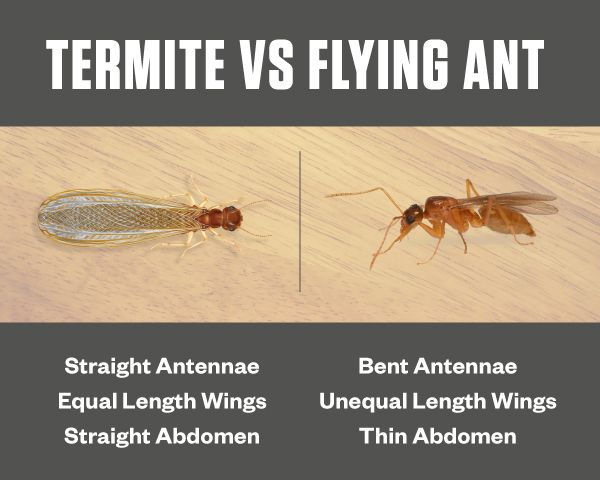
One of the most common mistakes homeowners make is confusing termites with flying ants.
At a glance, they can look very similar, especially if you’re not expecting to see either one inside your home.
This confusion often leads people to underestimate the situation, assuming it’s just a minor ant issue when it could actually be termites.
There are a few key differences you can look for. Termites have straight, uniform bodies, while ants have a more defined, pinched waist.
Their wings are another giveaway, termite wings are equal in length, while flying ants have larger front wings and smaller back wings. Antennae also differ, with termites having straight antennae and ants having bent or elbowed ones.
While these differences might seem small, they matter a lot. Misidentifying termites as ants can delay the proper response, giving a termite colony more time to grow and cause damage.
If you’re unsure, it’s always better to treat it as a potential termite issue and have it inspected rather than assume it’s something less serious.
Common Signs of a Termite Infestation
Termites are often called “silent destroyers” for a reason. Unlike other pests, they don’t make themselves obvious.
Instead, they work behind walls, under floors, and inside wooden structures, which makes them difficult to detect early. That’s why knowing the warning signs is so important.
One of the most common indicators is mud tubes along your foundation or walls. These small, dirt-like tunnels are how termites travel while staying protected from the open air.
You might also notice wood that sounds hollow when tapped, which can signal internal damage that isn’t visible from the outside.
Other signs include discarded wings, bubbling or peeling paint, and small cracks in wood structures.
While none of these may seem urgent on their own, together they can point to an active infestation.
Catching these signs early can make a significant difference in preventing more serious structural damage.
Why Termites Are a Serious Problem

Termites aren’t just another household pest, they’re a structural threat.
Over time, they feed on wood and other cellulose materials, which means they can weaken the very framework of your home. What starts as a small, hidden colony can eventually lead to costly repairs if left untreated.
The biggest issue is how long they can go unnoticed. Because they operate out of sight, many homeowners don’t realize there’s a problem until significant damage has already been done.
By the time visible signs appear, the infestation may have been active for months or even years.
Financially, termite damage can be overwhelming. Repairs often aren’t covered by standard homeowners insurance, and the cost can quickly add up depending on the extent of the damage.
That’s why early detection and treatment are so important, it’s not just about removing pests, it’s about protecting your investment.
What You Should Do If You See Termites
If you suspect termites, the first step is to stay calm and avoid disturbing the area too much.
While it might be tempting to spray or clean immediately, doing so can make it harder to identify the source of the problem. Instead, take note of where you’re seeing activity and any visible signs.
Documenting what you see can also be helpful. Whether it’s swarmers near a window or mud tubes along your foundation, having a clear idea of the problem can make the inspection process more efficient.
The more information you have, the easier it is to determine the severity of the issue.
Most importantly, don’t wait to take action. Termites won’t go away on their own, and delaying treatment only gives them more time to spread.
Reaching out to a pest control professional early can save you time, stress, and money in the long run.
Why DIY Termite Treatments Don’t Work
Many homeowners try to handle termite problems on their own, especially at the first sign of activity.
While this might seem like a cost-effective solution, most DIY methods only address surface-level issues. They don’t reach the colony where the real problem exists.
Store-bought sprays and treatments may kill visible termites, but they won’t eliminate the source.
Termites typically live deep underground or inside wood structures, making them difficult to fully treat without specialized equipment and knowledge. This often leads to recurring infestations.
In the long run, DIY attempts can actually delay proper treatment and allow the problem to worsen.
What might have been a manageable issue early on can turn into a much larger infestation. That’s why professional intervention is usually the most effective approach.
How Professional Termite Treatment Works
Professional termite control starts with a thorough inspection of your home. This includes checking the foundation, crawl spaces, and any areas where moisture or wood is present.
The goal is to identify not just the signs of termites, but the location of the colony itself.
From there, treatment options are tailored to your specific situation.
This may include liquid barriers that prevent termites from entering your home or bait systems that eliminate the colony over time. These methods are designed to be both effective and long-lasting.
The biggest advantage of professional treatment is prevention. Instead of just reacting to a current problem, the focus is on protecting your home from future infestations.
This gives you peace of mind knowing the issue is fully addressed.
How to Prevent Termites This Spring
Prevention starts with reducing the conditions that attract termites.
Moisture is one of the biggest factors, so fixing leaks, improving drainage, and keeping areas dry can make a significant difference. Even small changes can help reduce risk.
It’s also important to manage what’s around your home. Keeping wood, mulch, and debris away from your foundation limits access points for termites.
Sealing cracks and gaps can further reduce the chances of them entering your home.
Routine inspections are another key part of prevention. Even if you’re not currently seeing signs, having your home checked can catch potential issues early.
Staying proactive is one of the best ways to avoid costly damage down the line.
Why Choose Ohio Pest Control

When it comes to termite issues, local experience matters. Ohio Pest Control understands the specific conditions that lead to termite activity in this region, especially during the spring months.
That knowledge allows for more accurate identification and effective treatment.
Their approach focuses on both solving the current problem and preventing future ones. Instead of quick fixes, the goal is long-term protection for your home.
This ensures that you’re not dealing with the same issue again a few months later.
Choosing a trusted, local provider also means you’re working with a team that understands your concerns.
From inspection to treatment, the process is designed to be straightforward, effective, and focused on protecting your home.
FAQ Section
Q: Are termites common in Ohio?
A: Yes, termites are common in Ohio, especially during the spring when conditions are ideal for swarming and colony growth.
Q: What do termite swarmers look like?
A: They resemble flying ants but have straight bodies, equal-length wings, and straight antennae.
Q: How fast do termites cause damage?
A: Damage can begin quickly, but it often goes unnoticed for months or years without inspection.
Q: How much does termite treatment cost?
A: Costs vary depending on the severity, but early treatment is always more affordable than repairing structural damage.
Take Action Before Termites Cause Real Damage
Seeing termites in your home this spring can feel overwhelming, but taking action early makes all the difference.
What starts as a small sign can quickly turn into a larger issue if left untreated, which is why understanding the warning signs is so important.
The good news is that termite problems are manageable when addressed correctly. Whether you’re dealing with swarmers, visible damage, or just want peace of mind, there are solutions available that can protect your home long-term.
If you’re noticing signs of termite activity, now is the time to act. Scheduling an inspection with Ohio Pest Control can help you get clear answers and a plan to move forward before the problem gets worse.


Comments